
 English
 中文简体
 日本語
 한국어
 Español

- Type:
- Industry News
- Date:
- 2026-Nov-13
Content
Pick up a slow rising squishy and squeeze. It flattens under your fingers, holds for a beat, then eases back—often slowly enough that you can watch the corners round out again. That pause is the charm. It feels less like a rubber ball snapping back and more like dough remembering its shape. People often ask whether the slow return comes from a secret ingredient or a marketing trick. In our Yiwu factory, we explain it simply: slow rising is a behavior, not a magic material. The recipe, structure, and way you use the toy all shape that relaxed rebound.
What Does “Slow Rising” Actually Mean?
“Slow rising” describes how long a squishy takes to return to its original shape after compression. There is no universal timer. One toy may recover in five seconds, another in thirty, and a dense gel-filled piece may take longer. The phrase describes feel, not a regulated category. A slow rising squishy can be foam, silicone, gel, or a combination, as long as the recovery is deliberately gentle.
This is where shoppers sometimes confuse cause and effect. A squeeze toy is built to be squeezed; a slow rising toy is built to be squeezed and to recover slowly. Most slow rising toys are squeeze toys, but not every squeeze toy qualifies. If it springs back immediately, it may still be fun—just not slow rising.
The Materials Behind the Slow Rise
Slow-Rise Foam: Air, Cells, and Memory
Most classic slow rising squishies are polyurethane foam. Think of the foam as a sponge made of millions of tiny polymer cells. When you press it, air pushes out and the cell walls fold and compress. When you let go, air creeps back in and the polymer chains slowly relax toward their original position. In a slow-rise formulation, both processes are deliberately restrained. The foam may be viscoelastic—meaning it has memory and resistance—so it does not snap back like a rubber band. Cell size, wall thickness, density, and the exact foam recipe all change the pace. A finer, denser foam often feels smoother and rises more slowly; a light, open foam can feel airy and recover faster.
Silicone and Gel: A Softer, Weightier Feel
Silicone squishies work differently. Silicone itself is elastic, so a solid silicone piece tends to return fairly quickly unless it is very soft. Many slow rising silicone toys use a soft outer skin and a gel or fluid filling. Squeeze it, and the filling shifts; release it, and the filling flows back slowly through the cavity. Shell thickness, filling viscosity, and internal shape control the rebound. This construction often feels denser, cooler, and smoother than foam, and it can be more durable for repeated squeezing. Our Jichao Rabbit range focuses on food-grade silicone because it gives us a clean, soft touch and a surface that is easier to wipe down. We still tune each design by hand—wall thickness and fill matter as much as the material name.
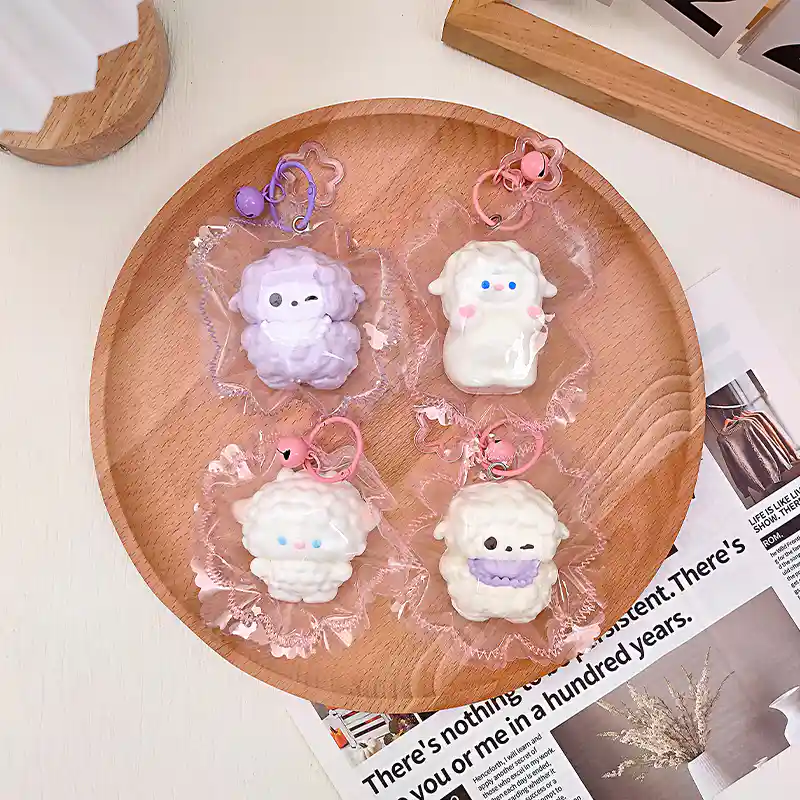
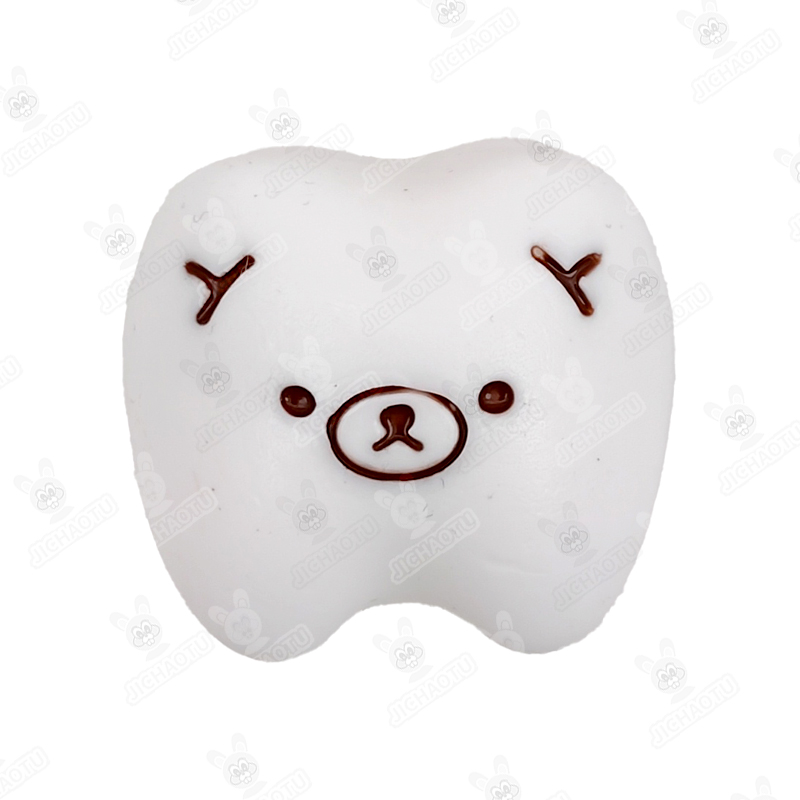 Relax Bear Food-Grade Silicone Squishy ToyFour milky-white bear styles in food-grade silicone, with keychain charm and slow rebound, suited to stress relief and daily carry.View Product →
Why Some Squishies Rise Faster Than Others
Two squishies can look identical and behave differently. That is normal. Rebound rate is the result of several small decisions:
- Material and formulation. A foam’s polymer recipe, or a gel’s viscosity, sets the basic pace.
- Cell or fill structure. Open cells, closed cells, tiny cavities, and internal channels all affect how air or gel moves.
- Wall thickness and density. A thicker skin or denser core usually slows the return and adds weight.
- Temperature. Cold rooms slow many squishies; warm hands and warm rooms speed them up. Avoid hot cars.
- Use and age. Repeated hard squeezing can soften foam or stress seams; dust and skin oils change the surface.
Foam vs. Silicone: A Practical Comparison
Both materials can feel wonderful. The table below is a starting point, not a scorecard.
| Feature | Slow-rise foam | Silicone or gel-filled |
|---|---|---|
| Feel | Light, airy, spongy | Dense, smooth, cooler |
| Rebound | Often several seconds to half a minute | Varies with fill; can be gradual |
| Durability | Can tear or crumble with heavy use | More tear-resistant; seams matter |
| Cleaning | Spot clean; avoid soaking | Wipe or rinse; dry fully |
| Best for | Gentle handling and display | Frequent squeezing and sensory play |
How to Choose a Slow Rising Squishy You’ll Actually Enjoy
Decide what you want from the toy. For light, airy desk play, foam may be ideal. If you plan to squeeze hard and often, a well-sealed silicone or gel-filled piece may hold up better. For a child, check the age recommendation and small parts first. For sensory or focus use, choose a size that fits your hand and a texture you genuinely like—no specification sheet can replace that.
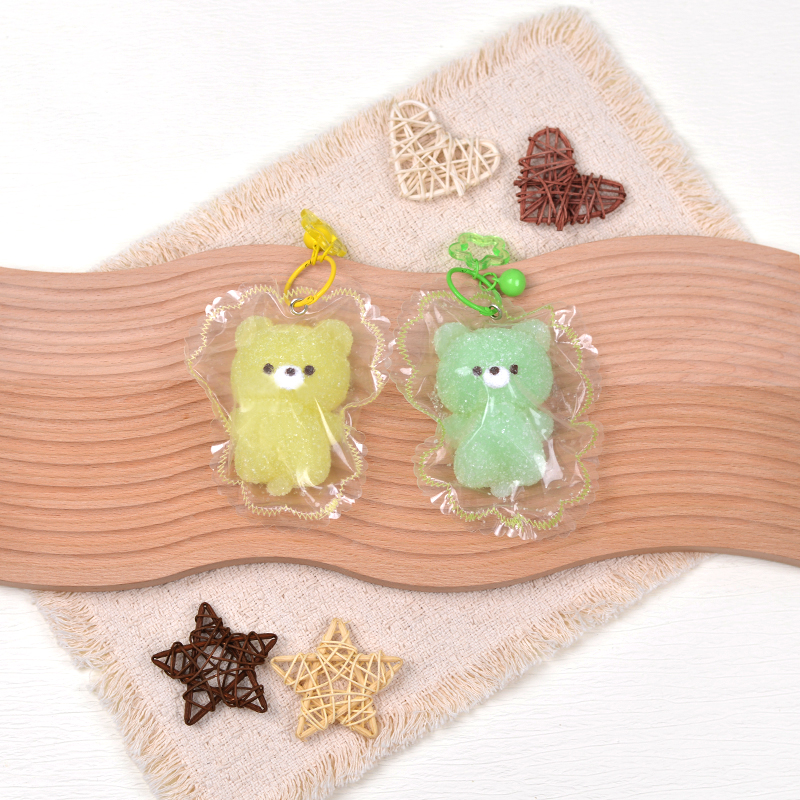
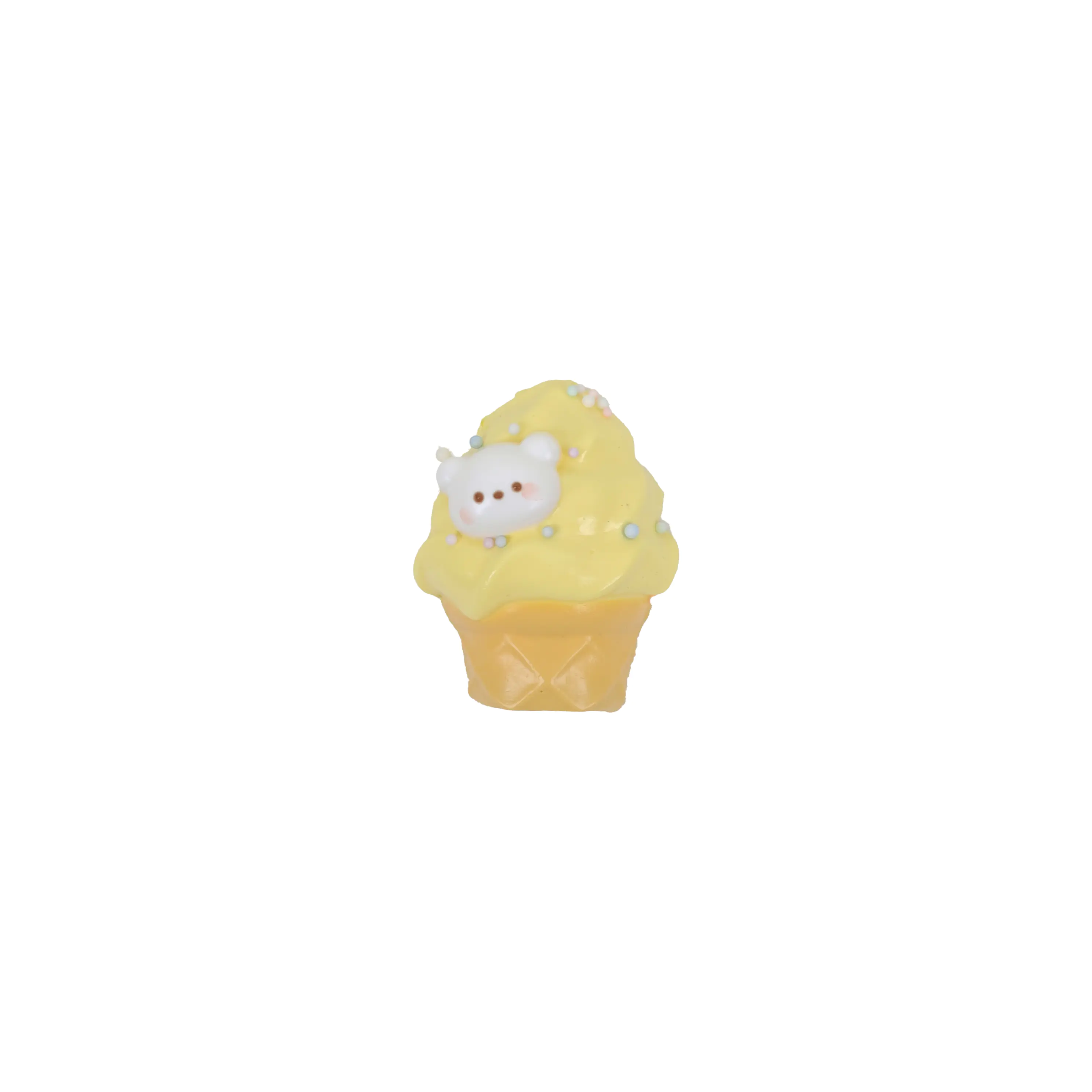 Teddy Bear Ice Cream Cone Silicone SquishyDessert-themed food-grade silicone squishy in three color styles, with hanging ring and slow rebound for stress relief or portable decoration.View Product →
- Do a press test. If you can handle it, press and count. A good slow rise recovers evenly and does not leave a deep dent.
- Check seams and surface. Look for thin spots, sticky patches, splits, or a strong chemical smell.
- Read the material note. Look for foam, silicone, or gel fill, plus age and safety information.
- Match care to material. Foam needs spot cleaning; silicone can often be washed and dried fully.
Safety, Care, and Realistic Expectations
Slow rising squishies are fun, but they are not indestructible, and they are not food. That matters because “food-grade silicone” can sound edible. It is not. Food-grade means the material has been selected and tested for its intended use; it does not turn a toy into a snack. For silicone pieces, check relevant certifications such as FDA, LFGB, or SGS, and always follow the age label. For foam pieces, watch for tears and crumbling, which can create small fragments. If a squishy develops a sticky surface, a strong smell, or a split seam, retire it. Our guide to silicone squishy safety walks through materials and tests in more detail.
Cleaning depends on the material. Foam should be spot cleaned with a damp cloth and air dried; soaking can damage the cells. Silicone can usually be wiped or washed with mild soap, then dried completely, especially around seams. Avoid harsh cleaners, heat, and direct sun. With reasonable care, a good squishy keeps its feel far longer.
If you prefer a wipe-clean surface, a silicone food-shaped piece is a practical choice.
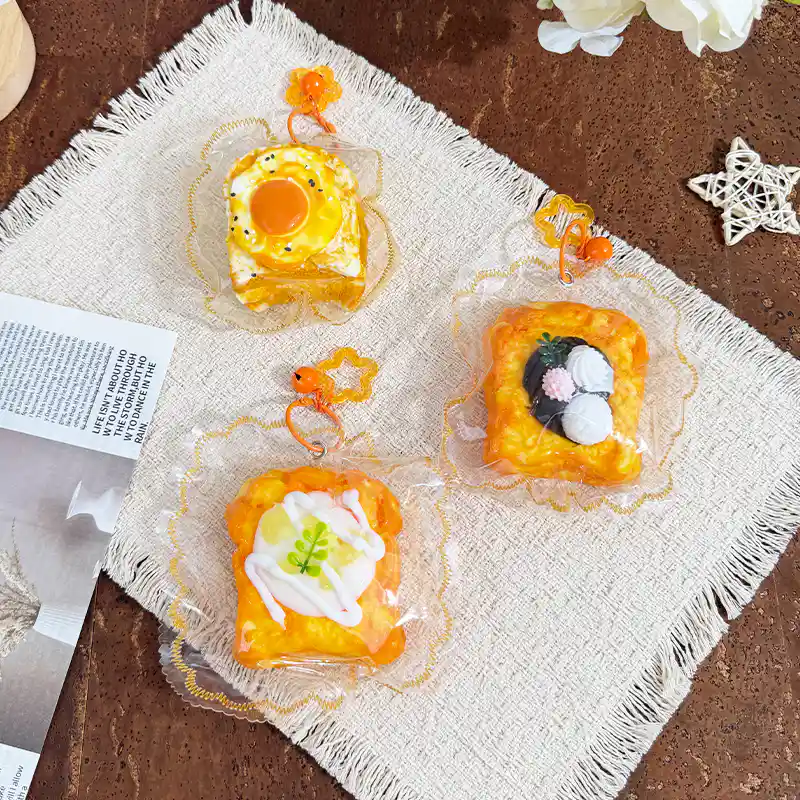
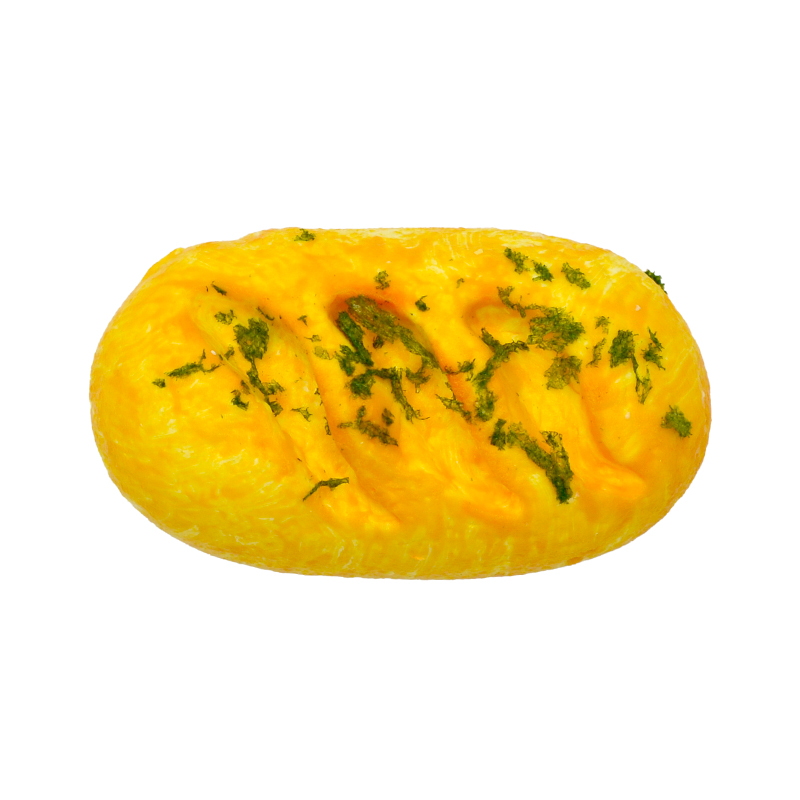 Baked Bread Food-Grade Silicone SquishyRealistic bread-shaped silicone squishy in two styles, with hanging ring and slow rebound for stress relief, desk decor, or bag charm.View Product →
The Bottom Line
Slow rising squishies work because their materials are designed to delay recovery. Foam does it with air and viscoelastic cell walls; silicone and gel do it with soft shells and slow-flowing fill. Temperature, density, seams, and use all change the feel. The best choice is the one that fits your hand, your habits, and your safety standards—not simply the one that rises the slowest. At Jichao Rabbit, we build our food-grade silicone pieces around that idea: a pleasant squeeze, a calm return, and a surface that can handle real life.