
 English
 中文简体
 日本語
 한국어
 Español

- Type:
- Industry News
- Date:
- 2026-Oct-30
Content
- 1 How Animal Squishy Toys Are Engineered, Tested and Finished Inside a Working Factory
- 2 What Makes Animal Squishy Toys Different From Ordinary Soft Toys
- 3 Material Families Used for Animal Squishy Toys
- 4 Rebound Curves: Why Slow Rebound Animal Squishy Toys Feel So Different
- 5 Durability Comparison by Material
- 6 From Sketch to Sealed Pack: The Production Route
- 7 Animal Design: Proportions That Feel Good in the Hand
- 8 Size and Weight Reference
- 9 Surface Finishes and Sensory Options
- 10 Safety Testing Behind Animal Squishy Toys
- 11 Inspection Checkpoints on the Production Line
- 12 Custom Animal Design Timeline
- 13 Packaging Formats for Animal Squishy Toys
- 14 Where Animal Squishy Toys Fit in Daily Life
- 15 Care, Cleaning and Storage
- 16 Troubleshooting Guide
- 17 Selection Checklist for Animal Squishy Toys
- 18 Frequently Asked Questions About Animal Squishy Toys
- 18.1 What are Animal Squishy Toys made of?
- 18.2 Why do some Animal Squishy Toys rise slowly?
- 18.3 Are Animal Squishy Toys safe for children?
- 18.4 Can Animal Squishy Toys be washed?
- 18.5 How long do Animal Squishy Toys last?
- 18.6 What size is best for Animal Squishy Toys?
- 18.7 Why does a new squishy animal sometimes smell?
- 18.8 Can the shape and color of Animal Squishy Toys be customized?
- 18.9 Why do squishy animals lose color in sunlight?
- 18.10 What is the difference between a squishy animal and a stress ball?
- 19 Key Terms Used With Animal Squishy Toys
How Animal Squishy Toys Are Engineered, Tested and Finished Inside a Working Factory
Every Animal Squishy Toys line begins as a conversation between a sculptor, a materials technician and a quality engineer. The shape of a fox ear, the thickness of a dinosaur tail and the pore structure of the foam underneath are all decided long before a single piece is pressed from a mold. This page walks through the decisions that shape the hand feel, safety profile and lifespan of Animal Squishy Toys, using the measurements, process notes and checklists that a production floor works with every day.
Whether you are comparing materials, planning a new animal collection, or simply want to understand why one Animal Squishy Toys piece rebounds slowly while another snaps back at once, the sections below give concrete numbers and practical explanations instead of vague descriptions.
3 to 8 s
Typical full recovery window for slow rebound PU foam animal pieces
4 Materials
PU foam, TPR, silicone and sponge filled plush are the main families
5 to 12 cm
Most popular size range for palm friendly Animal Squishy Toys
10 Steps
From sketch to sealed pack in a standard development route
What Makes Animal Squishy Toys Different From Ordinary Soft Toys
Animal Squishy Toys are defined by deformation behavior. A plush bear is soft because of its fiber fill, but it does not respond to a firm squeeze with a controlled, visible change of shape. A squishy animal does. Press the belly of a squishy panda and the body flattens, the cheeks bulge slightly, and the piece returns to its original outline at a pace that depends on the material inside. That measurable return is what users describe as the squish.
Three physical properties explain almost everything people feel when they hold Animal Squishy Toys: hardness, rebound speed and surface friction. Hardness decides how much force is needed to deform the piece. Rebound speed decides how long the piece takes to recover. Surface friction decides whether the skin feels silky, tacky, powdery or fuzzy. Adjusting any one of the three creates an entirely different product, even if the animal shape stays identical.
A Simple Way to Read Any Squishy Animal
Press the center of the body with a thumb for three seconds, then release. If the dent fills within one second, the piece is a fast rebound type. If the dent lingers for several seconds and closes gradually from the edges, it is a slow rebound type. If the surface keeps a faint fingerprint, the skin coating is too thin or the foam is too open celled.
Material Families Used for Animal Squishy Toys
Four material families cover nearly every squishy animal on the market. Each has a distinct production method, a distinct feel and a distinct set of care rules. Choosing the right one is the single most important decision in any Animal Squishy Toys project.
PU Foam
Polyurethane foam is poured into a mold and cured, creating a fine open cell structure covered by a thin skin. It delivers the slowest, most luxurious rebound and is the preferred choice for bread shaped animals, mochi style cats and bakery themed pandas. The trade off is a more delicate surface that benefits from careful handling.
TPR
Thermoplastic rubber is melted and injected or poured, giving a stretchy, slightly tacky body that can be pulled, squeezed and twisted. TPR animals suit sensory play, grip training and water friendly designs because the material tolerates wiping and brief rinsing very well.
Silicone
Platinum cured silicone gives a smooth, resilient body with a quick, clean rebound. It is stable across a wide temperature range and holds color strongly, which makes it well suited to translucent jelly animals, glitter filled forms and pieces that need frequent washing.
Sponge Filled Plush
A knitted or velvet cover surrounds a soft sponge core. The result is a warm, huggable squishy animal that suits larger sizes and comfort focused use. Cover fabric choice, from short velour to minky, changes the feel more than the core does.
Typical Technical Reference Values
The table below lists indicative production ranges. Exact values shift with formulation, wall thickness and mold design, but the comparison shows how each family behaves in the hand and on the test bench.
| Property | PU Foam | TPR | Silicone | Sponge Filled Plush |
|---|---|---|---|---|
| Approximate density | 0.10 to 0.30 g/cm3 | 0.90 to 1.10 g/cm3 | 1.05 to 1.20 g/cm3 | 0.03 to 0.06 g/cm3 core |
| Hardness range | Shore 00 10 to 30 | Shore 00 25 to 55 | Shore 00 30 to 65 | Soft, fabric dependent |
| Recovery time | 3 to 8 seconds | 1 to 3 seconds | Under 1 second | 2 to 5 seconds |
| Surface feel | Silky, matte | Slightly tacky | Smooth, satin | Fuzzy or velvet |
| Washing method | Damp cloth only | Wipe or light rinse | Full wash | Spot clean |
| Working temperature | 5 to 40 C | 0 to 50 C | minus 20 to 100 C | 5 to 40 C |
| Best animal styles | Bread cats, mochi bears, cake pandas | Stretch frogs, grip animals | Jelly seals, glitter turtles | Large pigs, plush sloths |
Rebound Curves: Why Slow Rebound Animal Squishy Toys Feel So Different
Rebound is easier to understand when drawn. The chart below plots how much of its original height each material family regains after being held at half compression for three seconds. Slow rebound PU foam climbs gradually and reaches full height around the eight second mark, while silicone is almost back to normal within a single second.
Indicative Recovery Curves After 50 Percent Compression
PU foam TPR Silicone Sponge filled plush
100%75%50%25%0%
0 s1 s2 s3 s4 s5 s6 s8 s
Values are reference figures from typical production formulations on 60 mm test pieces and are intended for comparison, not as guaranteed specifications.
Reading the Chart
The orange line shows why PU foam Animal Squishy Toys attract users who enjoy a deliberate, relaxing press. The long climb gives the hand something to follow, which is the core of the stress relief effect. Silicone, by contrast, rewards rapid repeated pressing, because the piece is ready for the next squeeze almost immediately. Plush filled animals sit in the middle, with a gentle recovery that suits hugging more than pinching.
Durability Comparison by Material
A squishy animal that loses its surface after a month is a disappointment, no matter how good the first impression felt. Durability testing repeats a fixed press on the same spot until visible wear appears, such as skin cracking, paint rubbing off or foam flaking. The bars below show indicative cycle counts for typical production quality.
Indicative Press Cycles Before Visible Surface Wear
PU foam scores lowest not because it is poorly made but because its fine skin is intentionally thin to keep the slow, silky feel. A thicker skin would last longer yet would also feel firmer and rebound faster. Good Animal Squishy Toys design is always a negotiation between feel and lifespan, and the best pieces find the balance point for the intended user.
From Sketch to Sealed Pack: The Production Route
A well run development route removes guesswork. Each stage has a defined output so that a design decision made on day two can be traced to the finished piece weeks later.
01
Concept Sketch
Front, side and top views of the animal are drawn with proportions marked. Ears, tails and limbs are simplified to avoid thin sections that tear.
02
3D Sculpt
A digital model checks wall thickness and undercuts. A body that looks charming on screen may trap air or resist demolding in reality.
03
Mold Making
Aluminum or silicone molds are cut with vents placed at the highest cavity points so trapped air can escape during filling.
04
Material Mixing
Resin, hardener, pigment and additives are weighed to a fixed formula sheet. A small deviation in ratio changes rebound speed noticeably.
05
Pouring or Injection
The compound enters the cavity at controlled temperature and pressure. Fill order matters because a late filled limb can show a visible seam.
06
Curing
Pieces rest in temperature controlled racks until the structure stabilizes. Rushing this stage is the most common cause of tacky skin.
07
Demolding and Trimming
Flash around ears and feet is trimmed by hand. Sharp tools are avoided on the face area to protect the skin.
08
Painting and Detailing
Eyes, blush, whiskers and spots are applied with flexible water based or silicone compatible paints that can stretch with the body.
09
Inspection
Each piece is checked for shape, color, rebound and surface quality under daylight balanced lamps.
10
Packing
Pieces are sealed in clean packaging with a moisture control sachet when needed, then labeled with material, age grading and batch code.
Animal Design: Proportions That Feel Good in the Hand
Successful Animal Squishy Toys follow a handful of proportion rules. A rounded body with a head about 40 to 50 percent of total height reads as friendly and cuddly. Short, thick limbs resist tearing and keep the squeeze satisfying. Tails and ears should be at least 6 mm thick at the base for foam and 4 mm for silicone so that they survive repeated pulling.
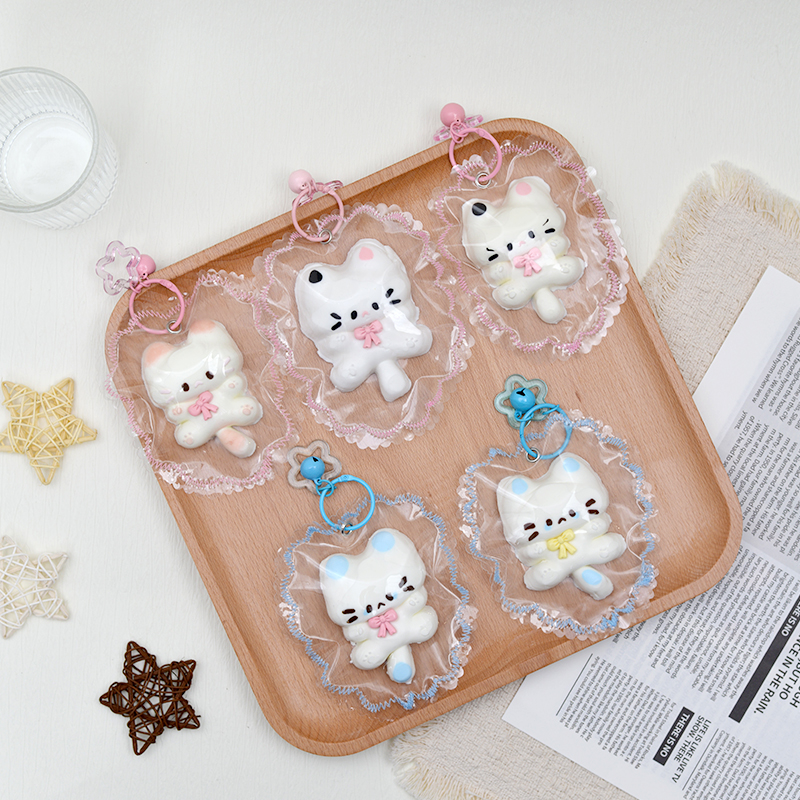
Cats and Dogs
Wide cheeks and a flat belly create the best pressing surface. Whisker lines are lightly printed rather than raised so that they do not wear unevenly.
Bears and Pandas
Rounded ears are molded as part of the body. Panda eye patches are printed in two thin layers to prevent bleeding into white areas.
Rabbits
Long ears are the weak point. Designers shorten them and widen the base, or fold them forward to share load with the head.
Dinosaurs
Spines and tail ridges are softened into scallops. Hard edges are avoided because they cut into the mold and show wear first.
Ocean Animals
Seals, whales and turtles benefit from translucent silicone or glitter fill. The smooth outline hides parting lines well.
Fantasy Animals
Unicorns and dragons use gradient spray finishes and soft horns. Horn tips are rounded to a radius of at least 3 mm.
Size and Weight Reference
Size changes both the experience and the safety grading. Smaller pieces fit a pocket but require stricter small part checks. Larger pieces feel more substantial and are easier to grip with both hands. The table lists common size bands with typical weights.
| Size Band | Length or Height | PU Foam Weight | TPR Weight | Silicone Weight | Typical Use |
|---|---|---|---|---|---|
| Mini | 4 to 6 cm | 6 to 12 g | 15 to 30 g | 20 to 40 g | Keychains, pencil case companions |
| Palm | 7 to 10 cm | 12 to 28 g | 35 to 70 g | 45 to 90 g | Desk stress relief, daily carry |
| Medium | 11 to 16 cm | 30 to 70 g | 80 to 160 g | 100 to 200 g | Two handed squeezing, gifts |
| Large | 18 to 30 cm | 80 to 200 g | Not common | Not common | Comfort pieces, room display |
Surface Finishes and Sensory Options
Surface treatment transforms a basic molded animal into a distinctive product. Each finish has its own handling notes and its own wear pattern, so it pays to match the finish to the way the piece will be used.
Matte Soft Touch
A fine coating reduces glare and fingerprints, giving a powdery feel that suits bakery style animals. It should be kept away from oily skin creams, which can darken the coating over time.
Glossy Jelly
Clear or tinted silicone with a polished mold surface produces a wet look. Dust clings more easily, so a quick rinse brings back the shine.
Flocked Fuzz
Short fibers are bonded to the surface for a peach skin feel. Flocking adds warmth but should not be soaked, since moisture weakens the bond.
Glitter and Glow
Glitter is sealed inside a clear layer so that it never touches the hand. Glow pigment charges under normal room light and fades gradually over an evening.
Scent and Color Considerations
Scented Animal Squishy Toys use stable fragrance compounds blended into the body, not sprayed on the surface. Subtle fruit or milk aromas are the most widely accepted. Color stability is checked by exposing sample pieces to a lamp that simulates sunlight for 24 hours and comparing them with an unexposed reference. Pastel pink and light yellow are the shades most sensitive to fading, so they receive extra stabilizer in the formula.
Safety Testing Behind Animal Squishy Toys
Safety evaluation is built into production, not added afterward. Pieces destined for different regions are tested against the relevant toy standards, commonly EN71, ASTM F963, CPSIA and GB 6675. The checks below are the ones that most directly affect everyday users.
| Test Item | What It Checks | Why It Matters |
|---|---|---|
| Small part test | Whether any detached piece fits inside a small parts cylinder | Prevents choking hazards for young children |
| Tensile and pull test | Strength of ears, tails and attached features | Confirms parts stay attached under strong pulling |
| Heavy element migration | Release of lead, cadmium, mercury, chromium and similar elements | Protects against harmful substance exposure |
| Phthalate content | Plasticizer levels in soft materials | Keeps soft materials within permitted limits |
| Flammability | Burning rate of fabric covers and foam | Reduces fire spread risk |
| Color fastness | Transfer of dye through rubbing or saliva | Prevents staining on hands and clothing |
| Odor assessment | Presence of strong or irritating smell | Signals curing quality and ingredient purity |
| Drop and squeeze fatigue | Resistance to tearing and cracking | Confirms the piece survives normal play |
Age Grading in Plain Terms
Pieces marked for ages three and above may include modest small details, provided they pass pull tests. Pieces intended for children under three need a one piece body, larger overall size and no detachable features. If an age mark is missing from a product, treat it as unsuitable for young children until confirmed.
Inspection Checkpoints on the Production Line
Quality control runs alongside production rather than waiting at the end. Typical checkpoints include the following.
Incoming Materials
Each batch of resin and pigment is sampled and compared with a retained reference. Moisture content in foam components is measured because water causes bubbles.
In Process
Mold temperature, cure time and mixing ratio are logged every hour. A first piece is approved before a run continues.
Final Review
Finished animals are sampled for rebound timing, paint adhesion, seam quality and weight. Pieces outside tolerance are separated and recorded.
Common Defects and What Causes Them
| Defect | Likely Cause | Corrective Action |
|---|---|---|
| Surface bubbles | Trapped air or moisture in the compound | Add vents, dry components, slow the pour |
| Sticky skin | Incomplete cure or excess release agent | Extend cure time, reduce spray amount |
| Cracked ears | Thin section or aged material | Thicken base, refresh formula batch |
| Faded paint | Weak paint adhesion or sunlight exposure | Use flexible paint, add primer layer |
| Uneven rebound | Density variation inside the piece | Control pour speed and mold temperature |
| Strong smell | Residual volatile compounds | Increase ventilation time before packing |
Custom Animal Design Timeline
Creating a new animal character follows a predictable calendar. The timeline below shows a realistic schedule for a new design moving from artwork to approved sample and then to a full production run.
Typical Development Calendar in Days
The mold stage is the longest fixed block before production, because a mold cannot be rushed without affecting surface quality. Revision rounds are short when the first sample is close to the sculpt, so clear reference images and a precise color code at the start save the most time.
Information That Speeds Up a New Animal Project
Visual References
Front, side and back drawings, plus any photo of a similar feel, help the sculptor match proportion and personality at the first attempt.
Color Codes
Specifying a Pantone style reference code for every color removes ambiguity, especially for pastel shades that look different on each screen.
Target Feel
Describe the desired rebound in seconds and the hardness in simple words such as cloud soft or firm jelly. This guides formula selection.
Destination Market
Knowing where the finished pieces will be used decides which safety standards and label formats are applied.
Packaging Formats for Animal Squishy Toys
Packaging protects the shape of a soft piece and shapes the first moment of contact. A badly folded box can leave a permanent dent in a PU foam animal, while a loose bag can cause scuffs on glossy silicone. Four formats are used most often.
| Format | Structure | Best For | Handling Note |
|---|---|---|---|
| Single clear bag | Heat sealed polybag with header card | Mini and palm pieces | Avoid stacking heavy cartons on top |
| Window box | Folding carton with clear panel | Gift ready animals | Use a molded tray to hold shape |
| Blind capsule | Sealed capsule or sachet with hidden design | Collectible series | Keep series weights consistent |
| Display tray set | Shallow tray with insert slots | Collection sets of six or twelve | Protect corners during transit |
Where Animal Squishy Toys Fit in Daily Life
People reach for squishy animals for different reasons, and the best material changes with the reason.
Desk Stress Relief
Palm sized PU foam animals give a quiet, slow press that does not distract coworkers. A flat bottom helps them sit upright next to a keyboard.
Sensory Play
TPR and silicone animals offer stretch, texture and a satisfying resistance. Simple shapes work best for small hands.
Classroom Calm Corners
Teachers use durable silicone animals because they can be washed between students and survive heavy daily use.
Gifts and Party Favors
Themed sets such as farm friends or ocean pals make easy, cheerful presents. Matching packaging adds to the unboxing moment.
Collectors
Series with a rare color variant encourage trading and display. Consistent molding quality keeps every piece in a set looking uniform.
Travel Comfort
Mini animals fit in a pocket and give a quiet outlet for nervous energy during journeys and waiting rooms.
Care, Cleaning and Storage
Good care can double the useful life of Animal Squishy Toys. The rules differ by material, so the quick matrix below pairs each material with the right routine.
| Material | Cleaning | Drying | Storage |
|---|---|---|---|
| PU foam | Wipe with a barely damp soft cloth | Air dry flat for 30 minutes | Cool shelf, away from direct sun |
| TPR | Mild soap and lukewarm water | Pat dry, air dry fully | Separate from dark fabrics |
| Silicone | Wash with mild soap, rinse well | Air dry or lint free cloth | Clean container, free of dust |
| Sponge filled plush | Spot clean with a soft brush | Air dry, never wring | Breathable bag in a dry room |
Five Habits That Extend Lifespan
Keep pieces away from heaters and car dashboards. Do not press with nails or pen tips. Wash hands before long play sessions. Rotate between two or three animals so that one piece does not take every squeeze. Replace any piece that cracks, flakes or becomes sticky, since a damaged surface can release fragments.
Troubleshooting Guide
| Observed Problem | Probable Reason | What To Do |
|---|---|---|
| Piece feels harder than before | Cold room or aging foam | Warm in hands for a minute, replace if it stays firm |
| Surface feels tacky | Humidity or surface oils | Wipe gently, dry fully, store with dry air |
| Dent does not recover | Material fatigue | Retire the piece to avoid further tearing |
| Color rubs off on hands | Weak paint layer | Stop use and keep away from young children |
| Piece has a lingering odor | Fresh from packaging | Air in a ventilated space for a day or two |
| Small tear near ear or tail | Pulling stress | Do not stretch further, replace the piece |
Selection Checklist for Animal Squishy Toys
Before Picking Up the Piece
Confirm the material label, the age grading and the safety standard noted on the pack. Check that the pack is clean, intact and free of strong odor.
In the Hand
Press the belly and the cheeks. Recovery should be smooth and even. Look for seams, bubbles and uneven paint, especially around the eyes.
For Younger Users
Choose TPR or silicone, a one piece body, a size over 5 cm and clear age grading. Avoid glitter filled pieces unless the seal is fully tested.
For Long Term Use
Choose silicone or TPR for frequent squeezing, and keep a PU foam animal as a gentle, occasional companion for quiet moments.
Frequently Asked Questions About Animal Squishy Toys
What are Animal Squishy Toys made of?
Most Animal Squishy Toys are made from PU foam, TPR, silicone or a sponge core wrapped in plush fabric. Each material gives a different rebound speed, texture and cleaning method.
Why do some Animal Squishy Toys rise slowly?
Slow rise comes from the open cell structure of PU foam. Air leaves the cells when the piece is pressed and returns gradually through a thin skin, producing a recovery of several seconds.
Are Animal Squishy Toys safe for children?
They are safe when the material, size and age grading match the child and when the piece has passed recognized toy safety tests. Younger children should use larger one piece animals under adult supervision.
Can Animal Squishy Toys be washed?
Silicone and TPR animals can be washed with mild soap and water. PU foam animals should only be wiped with a damp cloth, and plush types are spot cleaned.
How long do Animal Squishy Toys last?
With normal use, silicone and TPR pieces can stay in good condition for a year or more. PU foam pieces typically stay at their best for several months, depending on how often they are squeezed.
What size is best for Animal Squishy Toys?
Seven to ten centimeters suits most hands, giving enough volume for a satisfying squeeze without being awkward to carry. Mini sizes suit keychains, and larger sizes suit comfort and display.
Why does a new squishy animal sometimes smell?
Fresh pieces may hold residual compounds from curing. Airing the piece for a day or two in a ventilated room usually clears the odor. A sharp, lasting smell is a reason to stop using the piece.
Can the shape and color of Animal Squishy Toys be customized?
Yes. A factory can sculpt a new animal, match colors to a reference code, adjust hardness and rebound speed, and design matching packaging. A clear brief shortens the sample stage.
Why do squishy animals lose color in sunlight?
Ultraviolet light breaks down pigments, particularly pastel shades. Storing pieces in shade and choosing formulas with added stabilizers reduces fading.
What is the difference between a squishy animal and a stress ball?
A stress ball is usually a plain round form with a fixed, quick recovery. A squishy animal combines a character shape with a tuned material, so it offers a visual appeal, a distinctive surface and a wider range of rebound speeds.
Key Terms Used With Animal Squishy Toys
Rebound
The speed at which a pressed piece returns to its original shape.
Shore 00 Hardness
A scale used for very soft materials, where lower numbers mean a softer feel.
Open Cell Foam
Foam with interconnected pores that allow air to move through during pressing.
Flash
Thin excess material that escapes at mold seams and must be trimmed.
Demolding
The act of removing a cured piece from its mold without damaging it.
Soft Touch Coating
A thin finishing layer that creates a powdery, low gloss feel.